As a physical therapist and yoga teacher, I’ve seen firsthand the profound impact of the Yoga Wall, a truly transformative tool for spinal health. In my book, “Yoga for a Happy Back,” I dedicate an entire section to “Creating Space: Traction,” and the Yoga Wall is one of the most effective ways to achieve this essential healing principle.
What is Spinal Traction? At its core, back pain often stems from “compression.” This means a narrowing of the space between vertebrae, which can pinch nerves, irritate discs, or create friction between joint surfaces. The goal of spinal traction is simple: to create space. It’s “a deliberate, sustained pull,” as I describe, that lengthens the spine and surrounding muscles, allowing the body to decompress.
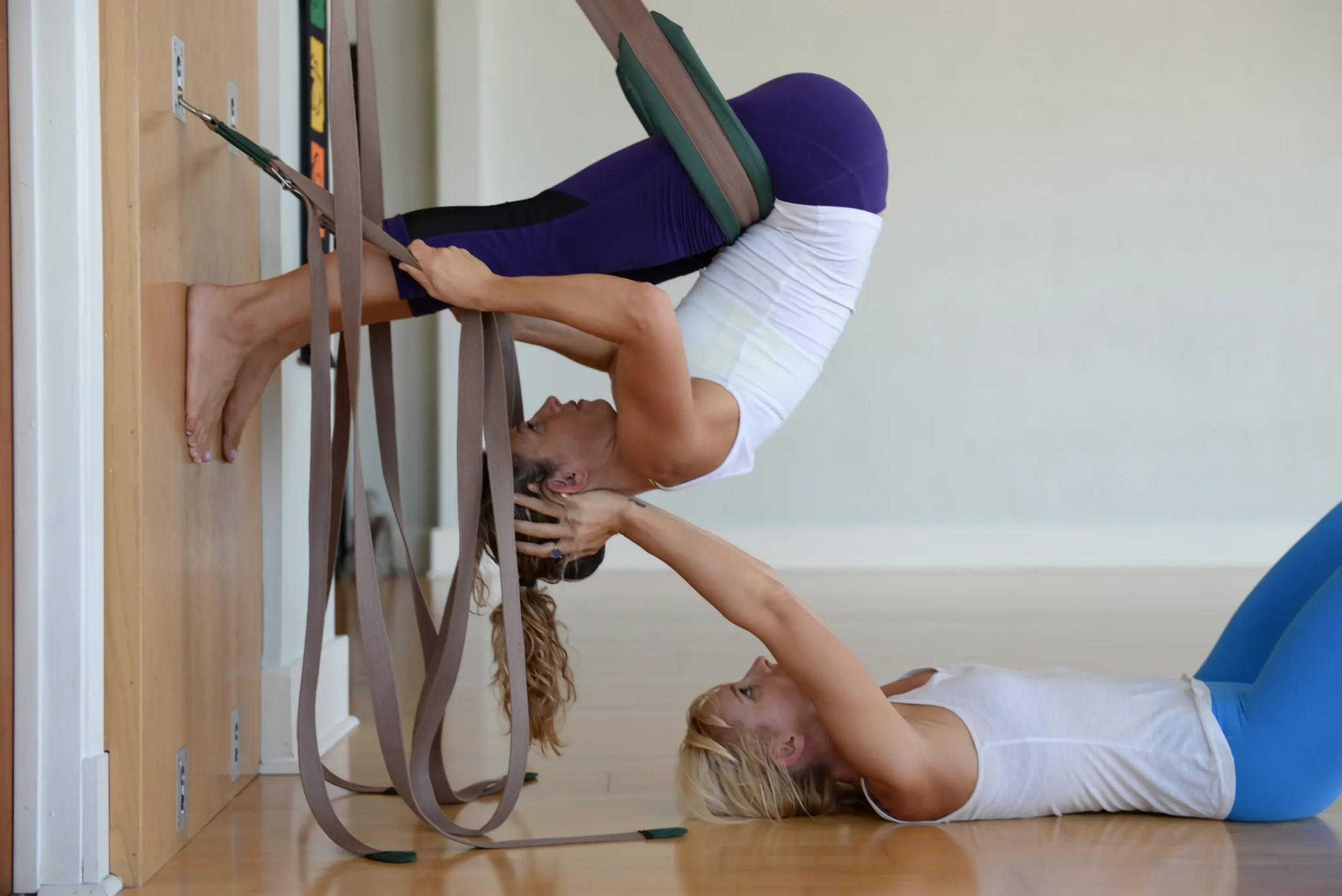
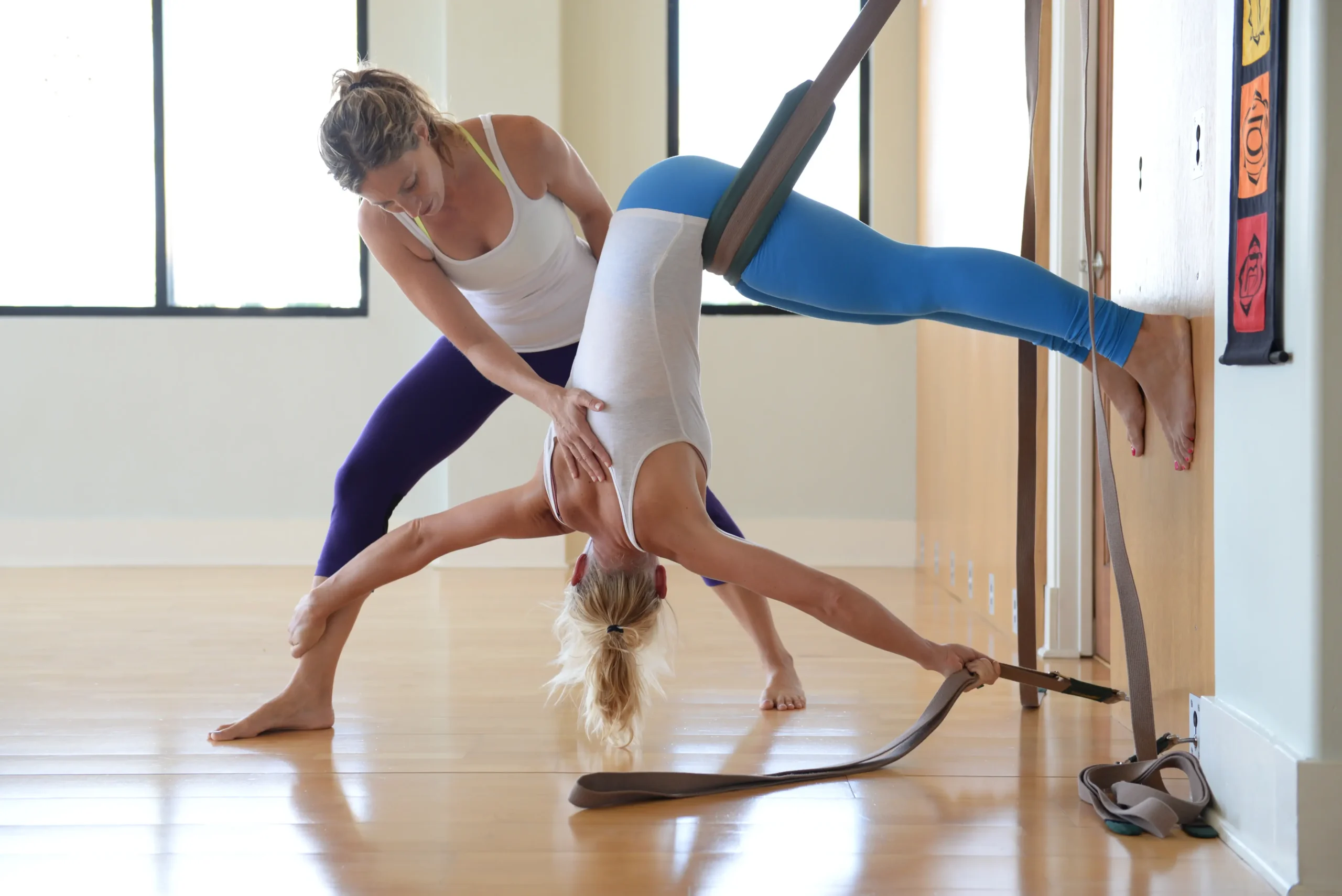
The Yoga Wall utilizes a system of straps and levers to gently and effectively apply this traction. Unlike passive stretching, the wall works with gravity and active engagement to help your body rediscover its innate length and alignment.
Benefits of the Yoga Wall for Back Health:
- Decompression: The primary benefit is the gentle pulling apart of the vertebrae. This relieves pressure on discs, nerves, and facet joints, which can immediately reduce pain and inflammation.
- Muscular Release: Acute or chronic back pain often involves muscles “clamping down” around the spine as a protective mechanism. Techniques like the “Pelvic Swing” on the wall encourage these deep spinal muscles (like the multifidus and erector spinae) to release their grip, fostering a sense of profound relaxation.
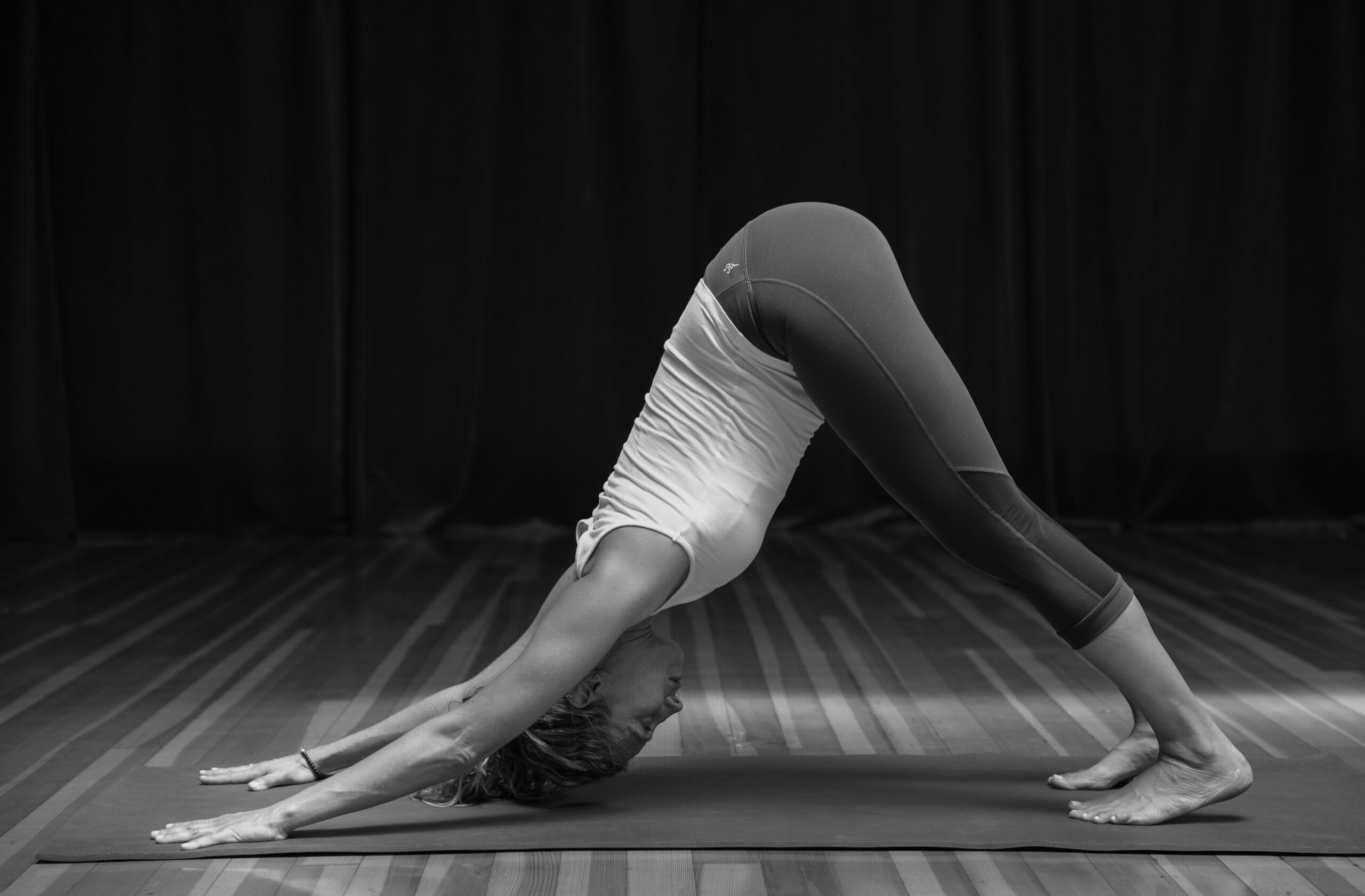
- Restoring Natural Curves: Many of us lose the natural curves of our spine due to poor posture, injury, or everyday habits. The Yoga Wall provides support and resistance to help re-educate the body, encouraging the spine to lengthen and find its optimal alignment. Poses like supported Downward Facing Dog (Adho Mukha Svanasana) on the wall allow gravity to assist in lengthening, helping to restore healthy spinal curves.
- Targeted Stretching & Strengthening: The wall allows for precise, supported stretches that might be difficult on the floor. For example, “Cross Stretches” on the wall enable you to lengthen specific sides of the trunk, addressing imbalances often seen in conditions like scoliosis. Simultaneously, it can be used to strengthen core and postural muscles in an aligned, integrated way.
- Increased Awareness: Working with the wall requires focused attention. As you say in Chapter 6, “Gravity assists the lengthening, while breath and awareness facilitate it.” This deep engagement cultivates body awareness, teaching you to “breathe into the spine” and release tension consciously, connecting breath to movement for true somatic release.
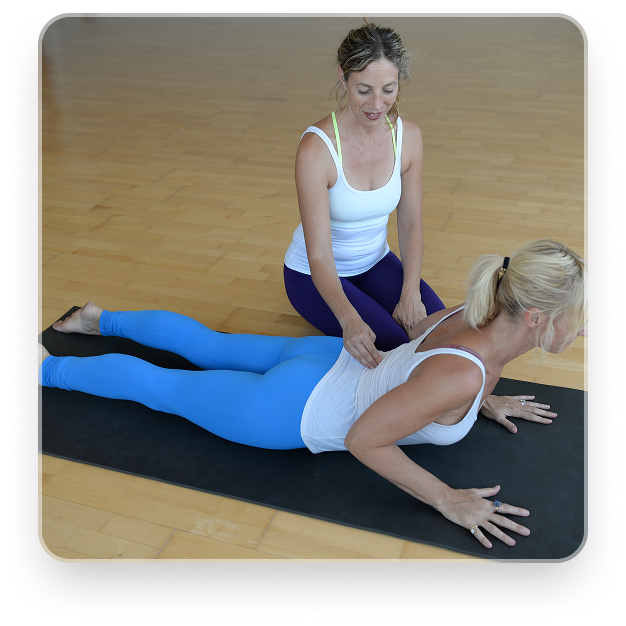
- Safe Backbends & Twists: For those cautious about backbends or twists, the wall offers support to explore these essential spinal movements safely. It allows for “length along with extension” in backbends, preventing hinging at one level, and enables twists to occur predominantly in the thoracic spine without compressing the sensitive lumbar region.
The Yoga Wall moves beyond simply “doing a pose.” It’s a powerful tool for self-exploration and profound healing, teaching you to trust your body’s ability to release, realign, and ultimately, find a happier, healthier back. It enables a practice that is both deeply restorative and dynamically strengthening, helping you truly “create space” in your life and your body.