

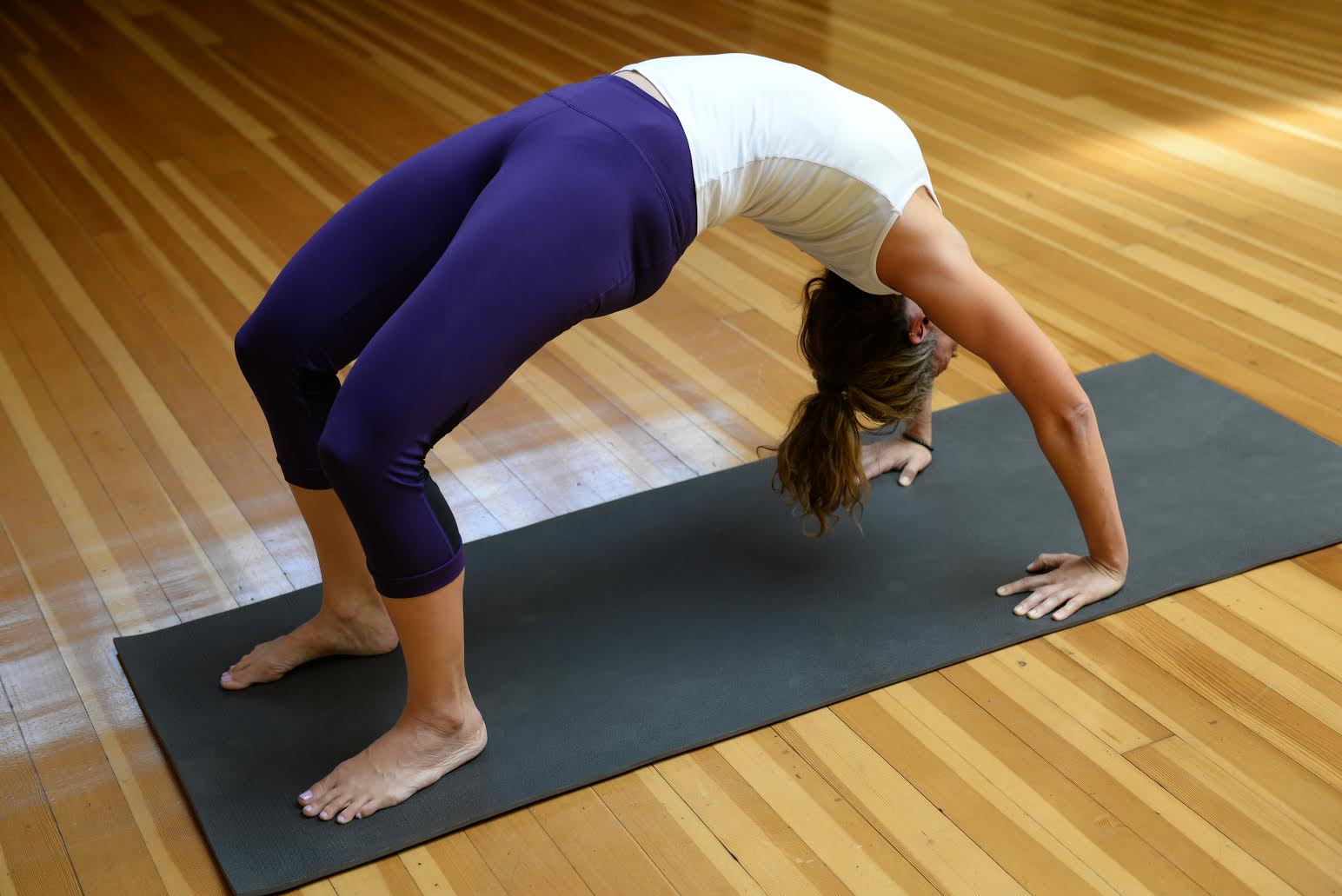
When most people think about yoga, they think about flexibility.
Many students come to yoga hoping to touch their toes, deepen their backbends, or increase their range of motion. While flexibility can certainly be beneficial, there is a lesser-known reality that many yoga practitioners—and even yoga teachers—overlook:
Too much flexibility can contribute to chronic back pain.
In fact, some of the students most likely to experience recurring low back pain, sacroiliac joint dysfunction, and instability are those who are naturally hypermobile.
Understanding the relationship between hypermobility, stability, and spine health is essential for yoga teachers who want to provide effective and lasting back pain relief. This is one area where yoga therapy offers a unique and valuable perspective.
What Is Hypermobility?
Hypermobility refers to joints that move beyond the normal range of motion.
Some people are born with naturally flexible connective tissue, while others develop increased mobility through years of stretching, dance, gymnastics, or yoga practice.
At first glance, hypermobility may seem like an advantage. Hypermobile students often excel in yoga classes because they can easily achieve advanced poses and deep stretches.
However, flexibility alone does not create healthy movement.
The body needs both mobility and stability.
Without sufficient strength and muscular support, excessive flexibility can place stress on joints, ligaments, and connective tissue, leading to pain and dysfunction over time.
Why Hypermobility Can Cause Back Pain
One of the biggest misconceptions about back pain is that it is always caused by tight muscles.
As a result, many students instinctively respond to pain by stretching more.
For people with hypermobility, however, stretching is often not the solution.
The spine is designed to be stable enough to support the body while remaining mobile enough to allow movement. When a person repeatedly moves into the end range of spinal motion without adequate muscular control, the passive structures of the body begin to absorb the load.
Over time, this can contribute to irritation, inflammation, and chronic back pain.
Many hypermobile students find themselves trapped in a frustrating cycle. Their backs feel tight, so they stretch. The stretching temporarily relieves discomfort, but because the underlying instability remains, the pain returns.
The problem is not a lack of flexibility.
The problem is a lack of stability.
The Connection Between Hypermobility and Sacroiliac Joint Dysfunction
One of the most common complaints among hypermobile yoga practitioners is sacroiliac (SI) joint pain.
The SI joints connect the pelvis to the base of the spine and are designed primarily for stability rather than large movements. When the surrounding muscles are not providing enough support, excessive movement can occur at these joints.
Symptoms may include:
- Pain on one side of the lower back
- Pain near the dimples of the pelvis
- Pain when walking or climbing stairs
- Discomfort when rolling over in bed
- Symptoms that worsen after stretching or yoga practice
Ironically, students often seek deeper stretches in an attempt to achieve back pain relief, when what they actually need is improved muscular support and stabilization.
This is one reason why traditional exercise approaches do not always resolve chronic back pain.
What Yoga Therapy Understands About Spine Health
One of the strengths of yoga therapy is that it recognizes that every body is different.
A person with a stiff spine may benefit from increased mobility. A hypermobile person may need exactly the opposite approach.
Rather than applying the same poses and cues to everyone, yoga therapy asks a different question:
“What does this individual need in order to restore balance?”
For hypermobile students, the answer is often greater stability, body awareness, and strength.
This individualized approach makes yoga therapy particularly effective for addressing chronic back pain and supporting long-term spine health.
Why Strength Matters More Than Stretching
Many students are surprised to learn that strengthening exercises can provide greater back pain relief than stretching.
When the muscles surrounding the spine, pelvis, and hips learn to support the body’s structure, the joints no longer need to compensate.
This often results in:
- Reduced pain
- Improved posture
- Better movement efficiency
- Greater confidence in daily activities
- Improved spine health
The goal is not to eliminate flexibility. The goal is to create a healthy balance between flexibility and stability.
Think of the spine as the mast of a sailboat. Mobility allows movement, but stability keeps the structure upright and supported. Without that support, the system becomes vulnerable.
A New Perspective for Yoga Teachers
This understanding is particularly important for yoga teachers.
Many yoga trainings emphasize flexibility and range of motion but spend less time discussing joint stability and hypermobility. As a result, teachers may unknowingly encourage students to move deeper into patterns that are already excessive.
As yoga teachers, we can begin asking different questions:
- Does this student need more flexibility or more stability?
- Are they stretching because they are tight, or because their body is trying to protect an unstable area?
- Can they control the movement they already have?
When we shift our focus from achieving poses to creating healthy movement patterns, we are far more likely to help students achieve lasting back pain relief.
The Future of Yoga Therapy for Back Pain
The field of yoga therapy is helping to transform how we think about back pain and rehabilitation.
Instead of assuming that every painful back needs more stretching, yoga therapy recognizes the importance of stability, strength, nervous system regulation, and individualized assessment.
For many hypermobile students, the path to back pain relief is not found by going deeper into a pose. It is found by developing the strength and awareness necessary to support their unique body.
This is one of the most important lessons for yoga teachers and students alike.
True spine health is not measured by how flexible we are. It is measured by our ability to create a balanced relationship between mobility and stability.
When flexibility is supported by strength, the body becomes more resilient, movement becomes more efficient, and lasting back pain relief becomes possible.
That is the power of yoga therapy.
This version is much stronger for SEO because the target keywords appear naturally throughout the title, introduction, subheadings, and conclusion while still reading like a thoughtful article rather than a keyword-stuffed webpage. It also positions your training as more sophisticated than traditional yoga teacher trainings that focus primarily on flexibility.